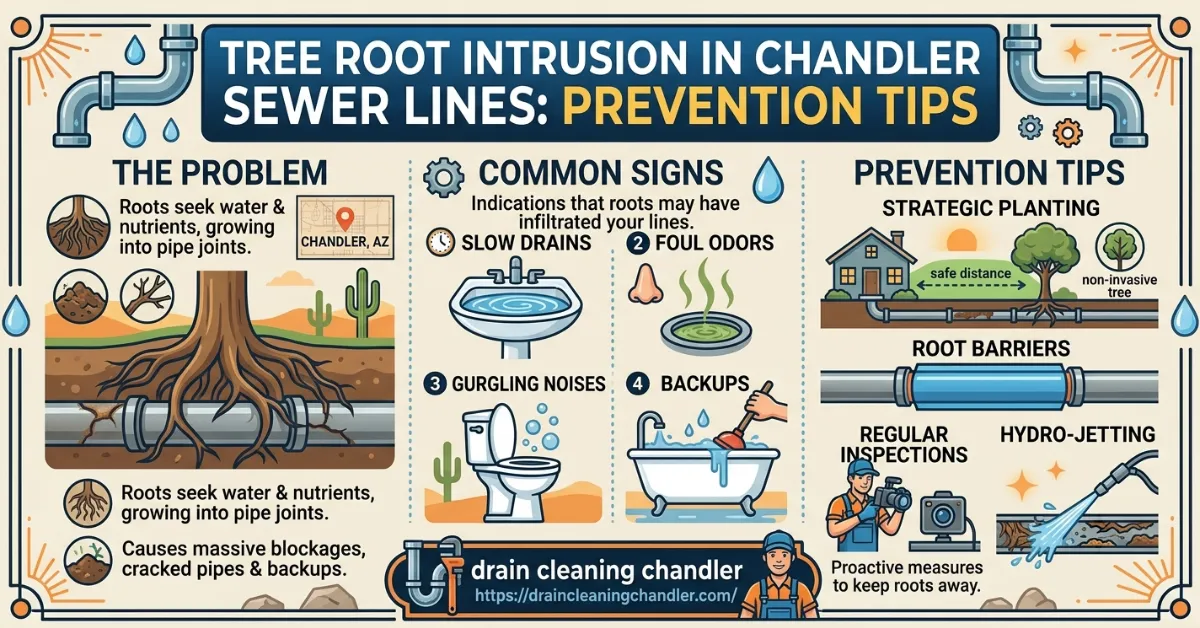
Tree roots get into Chandler sewer lines by growing toward moisture and nutrients leaking from tiny cracks, loose joints, or old pipe seals underground. Once a root finds that moisture source, it squeezes through the opening and keeps growing, eventually blocking flow or cracking the pipe entirely. Tree root intrusion in Chandler sewer lines is one of the most common causes of backups we see across the valley, especially in older neighborhoods with mature landscaping.
If you have noticed slow drains, gurgling toilets, or soggy patches in your yard, root intrusion could already be affecting your sewer line. Below, we will cover exactly why this happens in Chandler, Arizona specifically, how to prevent it, what it costs to fix, and when to call in a professional.
Why Chandler Homes Experience Drain and Sewer Root Problems
Chandler’s soil and landscaping create ideal conditions for root intrusion. Desert trees and shrubs send roots deep and wide searching for water, and older clay or cast iron sewer lines common in neighborhoods like Warner Ranch and East Chandler are especially vulnerable to cracking as the ground shifts with seasonal moisture changes.
A few local factors that make this worse include:
- Mature trees planted close to sewer lines, common in established Chandler subdivisions built before modern root barrier codes.
- Clay and Orangeburg pipe materials used in homes built several decades ago, which crack and separate more easily than modern PVC.
- Expansive desert soil that shifts with irrigation and monsoon rainfall, putting stress on pipe joints.
- Shared sewer laterals in some older Chandler subdivisions, where one property’s root problem can affect a neighbor’s line too.
Because of these conditions, we recommend Chandler homeowners have their sewer lines inspected every two years, or immediately if any warning signs appear.
How Do Tree Roots Get Into Sewer Lines
Definition: Root intrusion is the process by which tree or shrub roots enter underground pipes through small cracks, loose joints, or worn seals, drawn in by the moisture and nutrients inside the line.
Sewer pipes carry warm, nutrient rich wastewater, which is basically a magnet for nearby root systems. Even a pipe joint gap as small as a hairline crack can let in root hairs. Once inside, roots thicken over months and years, eventually forming a dense mass that traps toilet paper, grease, and debris until the line backs up completely.
Common entry points include:
- Joint connections between pipe sections
- Cracks from ground shifting or old age
- Loose seals around cleanouts
- Damaged sections from previous excavation work
Signs You Need Drain Cleaning or Root Removal
Catching root intrusion early saves money and prevents a full sewer line replacement. Watch for these warning signs:
- Slow draining sinks, tubs, or showers throughout the house
- Gurgling sounds from toilets or floor drains
- Sewage odor near the yard or main cleanout
- Multiple drains backing up at the same time
- Unusually green, lush patches of grass over the sewer line
- Toilets that need to be plunged repeatedly
If more than one fixture is affected at once, that almost always points to a main line issue rather than a single clogged drain, and root intrusion is one of the top causes we find in Chandler homes.
Sewer Line Cleaning and Root Removal Methods
Once roots are confirmed inside a line, there are a few proven ways to clear them. Our Sewer Line Cleaning service uses professional grade equipment to physically cut roots and clear debris without damaging the pipe.
Mechanical Rooter Service
A rooter service uses a motorized cutting head on a flexible cable to chew through root masses and restore flow. This is often the fastest fix for an active blockage, though it does not remove smaller root hairs still attached to the pipe wall.
Hydro Jetting
Definition: Hydro jetting is a drain cleaning method that uses a high pressure stream of water, often between 3,000 and 4,000 psi, to cut through roots, grease, and buildup while scouring the full diameter of the pipe clean.
Hydro jetting is generally the most thorough option for root intrusion because it clears the entire pipe wall rather than just cutting a path through the blockage. Many Chandler homeowners choose jetting as a maintenance step every year or two once roots have been an issue, since it also removes grease and mineral buildup that rooter cables leave behind.
Camera Inspections
Definition: A camera inspection uses a waterproof camera attached to a flexible rod to visually examine the inside of a sewer line and pinpoint cracks, root intrusion, or blockages.
We always recommend a camera inspection before and after root removal. It confirms exactly where the damage is, how bad the intrusion has become, and whether the pipe needs a patch, a liner, or full replacement. Without this step, homeowners sometimes pay to clear roots repeatedly without ever fixing the underlying crack that keeps letting roots back in.
Average Drain and Sewer Cleaning Costs in Chandler
Pricing depends on the severity of the root intrusion, the length of pipe affected, and the method used. Below is a general pricing guide based on typical service calls in the Chandler area.
Pricing Table
| Service | Typical Cost Range |
|---|---|
| Standard drain snaking (single fixture) | $95 to $225 |
| Main sewer line rooter service | $175 to $450 |
| Hydro jetting (residential) | $300 to $700 |
| Camera inspection | $125 to $300 |
| Combined jetting and camera inspection | $400 to $850 |
| Emergency after hours service | $200 to $500 additional |
| Sewer line repair (spot repair) | $1,000 to $4,000 |
| Full sewer line replacement or trenchless lining | $4,000 to $12,000 or more |
These figures are general estimates. Actual pricing depends on pipe access, depth, material, and the extent of root damage found during inspection.
Factors That Affect Drain Cleaning and Root Removal Cost
Several variables influence what you will pay for tree root intrusion in Chandler sewer lines:
- Severity of root growth. A small root hair issue costs far less to clear than a fully collapsed section.
- Pipe material and age. Older clay or Orangeburg pipe often needs repair alongside cleaning, unlike modern PVC.
- Access points. Lines with an accessible cleanout cost less to service than lines requiring excavation.
- Length of the affected line. Longer runs take more time and equipment to jet or camera thoroughly.
- Time of service. Emergency, weekend, or after hours calls typically carry an added fee.
- Whether repair is needed. Cleaning alone will not fix a cracked pipe; if roots have already damaged the line, repair or lining adds to the total cost.
Different Drain Types and How Root Intrusion Affects Each
Not every drain in your home carries the same root intrusion risk.
- Main sewer lines run from your home to the city connection and are the most common target for root intrusion because of their size, depth, and constant moisture.
- Branch lines connecting individual fixtures to the main line can suffer root damage where they exit the house near landscaping.
- Floor drains and cleanouts are often the first place backups appear because they sit at the lowest point in the system.
- Storm and yard drains can also suffer root intrusion, particularly near mature trees along property lines.
Residential and Commercial Drain Cleaning Services
Root intrusion affects homes and businesses differently, and the right approach depends on the property.
Residential service typically focuses on a single main line, one or two branch lines, and standard fixtures. Most jobs can be completed in a single visit once the root mass location is confirmed.
Commercial service often involves larger diameter pipes, multiple building connections, and stricter uptime requirements. Commercial properties in Chandler, particularly those with mature landscaping or older infrastructure, benefit from scheduled camera inspections to catch root growth before it causes a shutdown.
Emergency Drain Cleaning When Roots Cause a Backup
How do I know if I have a drain emergency? A drain emergency usually means sewage is backing up into your home, multiple fixtures are draining slowly or not at all, or water is pooling around a floor drain or toilet base. In any of these situations, stop using water in the house and call for Emergency Drain Cleaning right away, since continued use can push contaminated water further into your home.
Root intrusion tends to cause sudden emergencies because a slow growing blockage can reach a tipping point overnight, especially after heavy monsoon rainfall shifts the soil around older pipes. If you live in East Chandler or another neighborhood with mature trees near the sewer line, keep the number for emergency service handy.
Cost Saving Tips for Preventing Root Intrusion
Prevention is almost always cheaper than repair. Here is how Chandler homeowners can protect their sewer lines:
- Schedule a camera inspection every two years, especially if your home was built before 1990 or has large trees near the sewer line.
- Plant new trees at least 10 feet away from known sewer line paths, and choose slow growing, shallow rooted species when possible.
- Install a root barrier between existing trees and the sewer line to physically block future growth.
- Have hydro jetting done proactively every one to two years if you have had root issues before, rather than waiting for a backup.
- Avoid pouring grease or food scraps down drains, since buildup gives roots something extra to grab onto once they enter a pipe.
- Know your cleanout location so a technician can access the line quickly without excavation, saving on labor time.
- Address slow drains immediately rather than waiting, since early stage root growth is far cheaper to clear than a fully blocked line.
Why Professional Drain Cleaning Is Worth the Cost
It might be tempting to rent a cheap drain snake and handle a clog yourself, but root intrusion is rarely a simple clog. A consumer grade snake can punch a small hole through a root mass and make water flow again temporarily, while leaving most of the roots and any pipe damage untouched. That means the backup returns, often within weeks.
Professional service brings a few advantages that pay for themselves over time:
- Camera verification confirms the real cause instead of guessing.
- Hydro jetting equipment clears the full pipe diameter, not just a narrow channel.
- Experience with local pipe materials, including the clay and cast iron common in older Chandler homes.
- Proper diagnosis of repair needs, so you are not paying to clear the same roots again every few months.
For most homeowners, the cost of one thorough professional visit is less than the combined cost of repeated DIY attempts, water damage cleanup, and an eventual emergency call once the line fully blocks.
Conclusion
Tree root intrusion in Chandler sewer lines is a common but preventable problem once you understand why it happens and what to watch for. Regular camera inspections, smart tree placement, and proactive hydro jetting can save you from an expensive emergency down the road. If you are noticing slow drains, gurgling pipes, or a suspiciously green patch of lawn, do not wait for a full backup to take action.
Call our Chandler team today to schedule a camera inspection or sewer line cleaning, and let us catch root intrusion before it becomes a bigger problem.
Frequently Asked Questions
How do tree roots get into sewer lines? Tree roots enter sewer lines through small cracks, loose joints, or worn pipe seals, drawn in by the moisture and nutrients inside the pipe. Once a root finds an opening, it grows thicker over time until it blocks or damages the line.
How do I know if I have a drain emergency? A drain emergency usually involves sewage backing up into the home, several fixtures draining slowly at once, or standing water around a floor drain or toilet base. Stop using water and call for emergency service immediately in these situations.
Can I remove tree roots from a sewer line myself? A consumer drain snake may temporarily restore flow, but it typically will not clear the full root mass or reveal any underlying pipe damage. Professional hydro jetting and camera inspection are needed for a lasting fix.
How often should I have my sewer line inspected for roots? Most Chandler homes should have a camera inspection every two years, or annually if the home has mature trees near the sewer line or a history of root problems.
Does homeowners insurance cover tree root sewer damage? Coverage varies by policy and insurer, so it is best to check directly with your provider, though many standard policies do not cover gradual damage like slow growing root intrusion.
What is the difference between rooter service and hydro jetting? Rooter service uses a mechanical cutting head to cut through a root blockage, while hydro jetting uses high pressure water to clear the entire pipe wall clean, including grease, buildup, and smaller root hairs.
How much does it cost to remove tree roots from a sewer line? Root removal typically costs between 175 and 700 dollars depending on the method used, with hydro jetting and camera inspection combined generally falling between 400 and 850 dollars.
Can root intrusion cause permanent pipe damage? Yes, if left untreated, roots can crack, separate, or collapse sections of pipe over time, which may require spot repair or full replacement rather than simple cleaning.
What trees are safe to plant near a sewer line in Chandler? Slow growing, shallow rooted species planted at least 10 feet from the sewer line path are generally safer choices, and a root barrier adds an extra layer of protection for any tree near the line.
Do I need a camera inspection every time I have roots cleared? It is strongly recommended, since a camera inspection confirms whether the pipe itself has been damaged and helps avoid paying to clear the same roots again in a few months.
📞 Call Now(480) 480-2156