You have a drain emergency when water backs up from multiple fixtures at once, sewage odors appear inside your home, or standing water refuses to drain even after plunging. A slow draining sink, on the other hand, usually means a partial blockage that’s still manageable, at least for now. Knowing the difference between a slow draining sink vs full clog is what tells you whether to grab a plunger or call for emergency service.
Chandler homeowners often wait too long to address a slow drain, assuming it will resolve on its own. Understanding what separates a nuisance from a real problem can save you from a much bigger repair bill down the road.
What’s the Difference Between a Slow Draining Sink vs Full Clog?
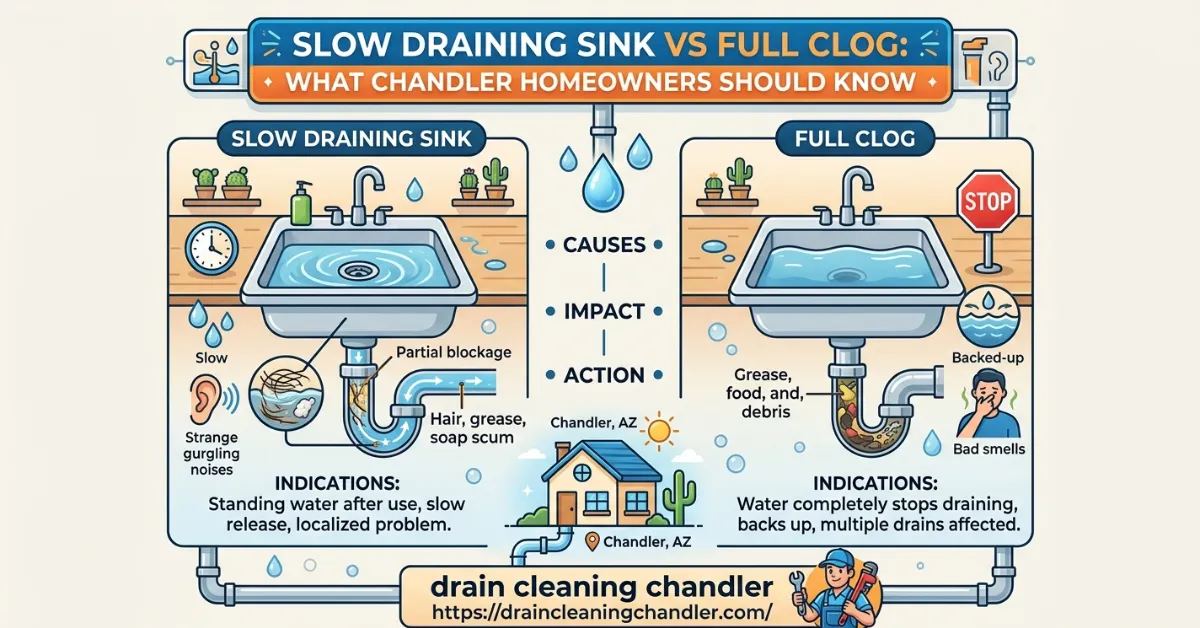
A slow draining sink still allows water to pass, just gradually, while a full clog blocks water flow almost completely, causing it to pool and back up. The distinction matters because a slow drain often warns you before a full clog forms.
Slow drain describes a partial obstruction that reduces flow but doesn’t stop it. Full clog describes a complete or near complete blockage that prevents water from draining at all.
Signs You Have a Slow Draining Sink
- Water takes noticeably longer to disappear after running the tap
- Gurgling sounds as the sink slowly empties
- A faint odor near the drain that comes and goes
- Water level rises slightly before slowly receding
A slow drain is usually the first sign that debris, grease, hair, or scale is building up somewhere in the pipe. It’s manageable at this stage, but it won’t fix itself.
Signs You Have a Full Clog
- Water stands in the sink and doesn’t drain at all
- A plunger has little to no effect
- Water backs up into a different fixture when you run this one
- A strong sewage smell accompanies the standing water
A full clog means the blockage has progressed to the point where water genuinely has nowhere to go, and that’s when the situation moves from a minor inconvenience toward a real plumbing emergency.
Why Slow Drains Turn Into Full Clogs
Slow drains rarely stay slow. Debris that partially blocks a pipe today continues collecting more hair, grease, and scale until the opening narrows further.
In Chandler homes with mature landscaping, this progression often overlaps with root intrusion, where roots gradually work their way into aging sewer lines and slowly restrict flow until a full clog develops. Homes in neighborhoods like East Chandler, which tend to have more established trees and older plumbing infrastructure, are particularly prone to this pattern.
How Do I Know If I Have a Drain Emergency?
You have a drain emergency if multiple drains back up at the same time, sewage odor is present inside your home, or water backs up from a fixture you didn’t even use. These signs mean the blockage sits in your main sewer line, not a single branch pipe, and it needs immediate attention.
If you’re seeing any of these signs, waiting overnight to see if it clears is rarely worth the risk. Reach out for Emergency Drain Cleaning rather than letting it progress further.
What Is Hydro Jetting?
Hydro jetting is a drain cleaning method that uses a high pressure stream of water to clear grease, scale, sludge, and root intrusion from inside a pipe without chemicals or digging.
For a slow drain that’s been building up for months, hydro jetting typically clears the full diameter of the pipe rather than just punching a temporary path through the clog, which is why it holds up longer than snaking alone.
What Is a Camera Inspection?
A camera inspection uses a waterproof camera on a flexible cable to visually examine the inside of a pipe and identify the exact cause and location of a blockage.
If a slow drain keeps returning after cleaning, a camera inspection is the most reliable way to confirm whether root intrusion, a bellied pipe, or scale buildup is the real cause.
Average Drain Cleaning Costs in Chandler
Costs vary depending on whether you’re dealing with a slow drain or a full clog, and how far into the system the blockage sits.
| Service | Average Cost |
|---|---|
| Standard drain snaking (single fixture) | $100 to $250 |
| Main sewer line cleaning | $200 to $600 |
| Hydro jetting | $300 to $800 |
| Camera inspection | $150 to $400 |
| Emergency/after hours drain cleaning | $250 to $750+ |
| Sewer line repair (spot repair) | $1,000 to $4,000 |
| Full sewer line replacement | $4,000 to $25,000 |
Addressing a slow drain early almost always costs less than waiting for it to become a full clog or an emergency call.
Factors That Affect Drain Cleaning Cost
- How far the blockage has progressed. A slow drain caught early is cheaper to clear than a full clog requiring hydro jetting.
- Pipe material and age. Original clay or cast iron pipes, common in older Chandler homes, often need more careful and costlier handling than PVC.
- Access to the drain. Cleanouts near the street are easier and cheaper to reach than lines under a slab foundation.
- Whether a camera inspection is needed. Confirming the exact cause upfront can prevent paying for the wrong fix.
- Time of service. Emergency or after hours calls typically carry a premium over scheduled daytime appointments.
Different Types of Drains We Service
- Kitchen sink drains. Frequently affected by grease and food debris, often the first place a slow drain shows up.
- Bathroom drains. Prone to hair, soap scum, and mineral buildup from Arizona’s hard water.
- Floor drains. Usually the first to show signs of a main line blockage since they sit at the lowest point in the system.
- Main sewer lines. Carry wastewater from every fixture, and a full clog here affects the whole home at once.
- Tub and shower drains. Slow drainage here is often an early warning sign before a full clog develops.
Sewer Line Cleaning
Sewer line cleaning clears the main pipe that carries wastewater from your home to the municipal connection. Since every fixture ties into this line, a slow draining sink that never gets addressed can eventually point back to a main line issue rather than a simple fixture clog.
Root intrusion remains the leading cause of main sewer line blockages throughout established Chandler neighborhoods, particularly where mature trees sit close to the sewer route.
Emergency Drain Cleaning Services
When a slow drain has progressed into backups, sewage odor, or standing water, it’s no longer something to monitor. Emergency drain cleaning covers exactly this scenario, where delaying service risks water damage inside the home.
A reliable emergency service should be available at any hour, since full clogs and backups rarely wait for regular business hours to happen.
Residential and Commercial Drain Cleaning
Residential drain cleaning typically covers single family homes dealing with kitchen, bathroom, or main line clogs. Commercial drain cleaning serves restaurants, retail spaces, and offices, where grease traps and heavier daily fixture use create more frequent slow drains and clogs.
Commercial properties often benefit from scheduled preventive cleaning, since higher usage volume accelerates buildup compared to a typical residential system.
Signs You Need Professional Drain Cleaning
- A sink or tub that consistently drains slower than it used to
- Gurgling sounds during normal drainage
- Recurring clogs despite recent DIY attempts
- Water backing up from a different fixture
- Sewage odor near a drain or in the yard
Why Scottsdale Homes Experience Drain Issues
Scottsdale’s combination of established, mature neighborhoods and desert landscaping creates specific plumbing challenges. Trees planted close to sewer lines frequently lead to root intrusion, while Arizona’s hard water accelerates mineral scale buildup inside pipes.
Older Scottsdale homes are also more likely to still have original clay sewer piping, which is more prone to bellying and cracking than modern PVC, meaning a slow drain in an older Scottsdale property is more likely to progress into a full clog faster than in newer construction.
Cost Saving Tips for Drain Maintenance
- Address a slow drain as soon as you notice it rather than waiting for a full clog.
- Avoid pouring grease, oils, or coffee grounds down kitchen drains.
- Use drain strainers in showers and tubs to catch hair before it accumulates.
- Schedule an annual camera inspection to catch root intrusion or scale buildup early.
- Consider preventive hydro jetting every 1 to 2 years if mature trees sit near your sewer line.
Why Professional Drain Cleaning Is Worth the Cost
A plunger or store bought drain cleaner might temporarily improve a slow drain, but if the cause is root intrusion, scale buildup, or a bellied pipe, the problem will keep returning. Professional drain cleaning addresses the actual cause rather than just the surface symptom.
Combining Clogged Drain Removal with a camera inspection lets a professional resolve the underlying issue in one visit, which typically costs less over time than repeated DIY attempts or recurring service calls for the same complaint.
Frequently Asked Questions
How do I know if I have a drain emergency?
You likely have a drain emergency if multiple fixtures back up at once, you smell sewage inside your home, or water backs up from a drain you didn’t use. These are signs the blockage is in your main line and needs immediate attention.
What’s the main difference between a slow drain and a full clog?
A slow drain still allows water to pass gradually, while a full clog blocks water flow almost entirely, causing it to pool and back up instead of draining.
Can a slow draining sink turn into an emergency?
Yes. A slow drain that isn’t addressed often continues collecting debris until it becomes a full clog, and in some cases progresses into a main line blockage that affects multiple fixtures.
Is it safe to use a plunger on a full clog?
A plunger can help with some full clogs, but if it has little effect or water backs up elsewhere in the home, the blockage is likely deeper in the system and needs professional attention.
How much does it cost to fix a slow draining sink in Chandler?
A simple slow drain fixture cleaning typically costs $100 to $250, while a full clog requiring main line service or hydro jetting can run $300 to $800 or more.
Why does my sink drain slowly even after I clean it?
Recurring slow drainage usually means the underlying cause, often grease buildup, mineral scale, or root intrusion further down the line, wasn’t fully cleared. A camera inspection can confirm the exact cause.
Should I use chemical drain cleaner for a slow drain?
Chemical cleaners may offer temporary relief for minor slow drains but rarely resolve the root cause and can damage older pipes with repeated use.
When should I call a professional instead of trying it myself?
Call a professional if a slow drain doesn’t improve after basic cleaning, if a full clog resists plunging, or if you notice backups in multiple fixtures or a sewage smell.
Does a slow drain always mean a clog is forming?
Not always, but it’s the most common cause. A slow drain can also result from a partially blocked vent, so a professional inspection helps confirm the exact reason.
How often should drains be inspected to prevent full clogs?
An annual camera inspection is a good baseline for most Chandler homes, while properties with mature trees or older piping may benefit from checking every 6 to 12 months.
Final Thoughts
Knowing the difference between a slow draining sink vs full clog gives you a real head start on protecting your plumbing. A slow drain is your warning sign, and addressing it early is almost always cheaper and less disruptive than waiting for a full clog or an emergency backup.
If your drains have been running slower than usual, reach out to our team for professional drain cleaning across Chandler and Fulton Ranch. We’ll diagnose the cause and get your plumbing back to normal before it turns into something bigger.
📞 Call Now(480) 480-2156