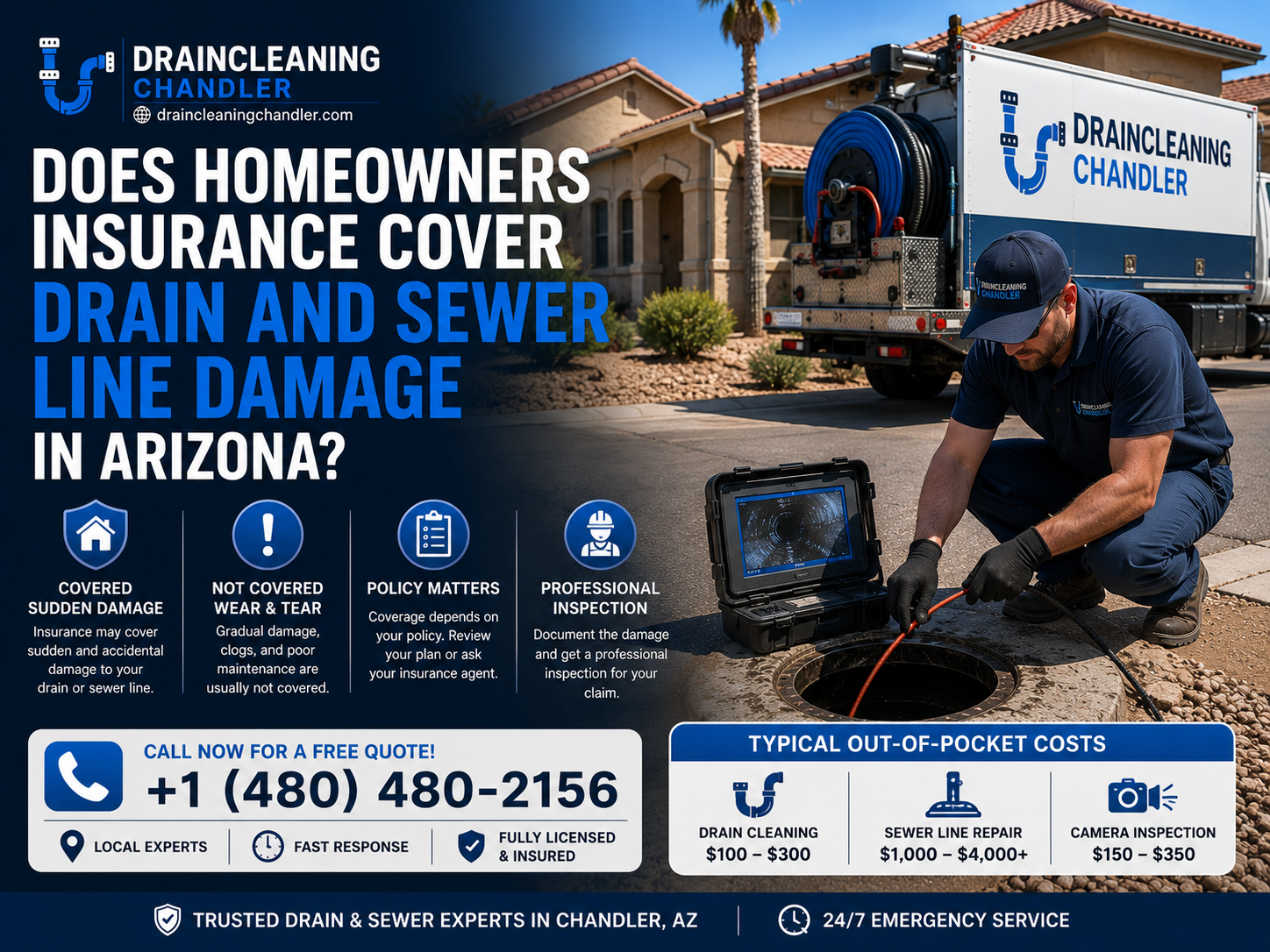
In most cases, no. Standard homeowners insurance in Arizona typically does not cover drain or sewer line damage caused by gradual wear, tree root intrusion, or aging pipes, since insurers treat these as maintenance issues rather than covered losses. Sudden and accidental damage, such as a pipe that bursts without warning, is more likely to be covered, though coverage details vary by policy and insurer.
That distinction between sudden damage and gradual deterioration is the single most important thing to understand about homeowners insurance sewer line Arizona coverage before you assume your policy will pay for a repair, and it is exactly what we will unpack below.
What Homeowners Insurance Typically Covers and Excludes
Homeowners insurance is built to cover sudden, accidental losses, not the slow breakdown of a home’s systems over time. That framework applies directly to drain and sewer line issues.
Sudden and accidental damage refers to a loss that happens unexpectedly and without warning, such as a pipe that bursts due to a hidden defect or an external event. Wear and tear refers to the gradual deterioration of a pipe or system over years of normal use, which insurers classify as a maintenance responsibility rather than an insurable event.
Most standard homeowners policies in Arizona:
- Cover sudden pipe bursts caused by an unexpected event
- Cover water damage to the home resulting from that sudden burst, such as flooring or drywall
- Exclude damage from tree root intrusion that developed gradually
- Exclude damage from aging, corroded, or deteriorating pipes
- Exclude the cost of repairing or replacing the pipe itself in most wear related cases, even if resulting water damage is covered
This is why two homeowners with nearly identical sewer line problems can get very different answers from their insurer, depending on whether the cause was sudden or gradual.
When Sewer Line Damage Might Be Covered
There are specific situations where a standard homeowners policy is more likely to provide coverage.
- A pipe bursts suddenly due to a manufacturing defect or hidden flaw, not long term wear
- A tree falls and physically damages a line in a single, identifiable event
- Water damage to the home occurs as a direct result of a sudden pipe failure, even if the pipe itself is not covered
- Coverage was specifically added through a service line or sewer backup endorsement, discussed below
In these cases, documentation matters. Insurers generally want evidence that the damage happened suddenly rather than developed over an extended period, which is one reason a camera inspection report can become useful during a claim.
When Sewer Line Damage Is Not Covered
Most real world sewer line problems in Arizona fall into this category rather than the one above.
- Gradual root intrusion that gradually worked its way into aging clay or cast iron pipe
- Corrosion or deterioration in an older sewer line
- Ground shifting or soil movement common in areas with caliche soil
- Clogs from mineral scale buildup caused by Arizona’s hard water over time
- Damage that occurred because routine maintenance was skipped
Because most sewer line failures develop slowly, homeowners are often surprised to learn a significant repair is not covered at all.
What Is a Sewer Line or Service Line Endorsement?
A service line endorsement is an optional add on to a homeowners policy that specifically covers damage to underground utility lines, including sewer, water, and sometimes electrical lines, that would otherwise be excluded under a standard policy.
This add on typically covers both the cost of repairing or replacing the damaged line and, in some cases, the cost to excavate and restore landscaping. It is usually inexpensive relative to the protection it provides, often a modest amount added to an annual premium, and it is worth asking your insurance agent about directly if you own an older Chandler home. For most homeowners insurance sewer line Arizona policies, this endorsement is the only realistic way to get coverage for the gradual wear that causes the majority of real world sewer line failures.
Does Homeowners Insurance Cover Sewer Backups?
Sewer backup coverage is a separate and equally important add on. Standard policies typically exclude damage from sewage backing up into the home through drains, which means a backup caused by a clogged main line or municipal sewer issue is often not covered unless this endorsement has been purchased.
Sewer backup coverage generally pays for cleanup and repair when wastewater backs up into the home, which is a common and often costly event for Chandler homes with older sewer laterals.
Cost of Sewer Line Cleaning and Repair Without Insurance
Since many sewer line issues are not covered, it helps to know what you might be paying out of pocket. Costs vary based on the cause and severity of the problem.
Chandler Sewer Line Service Price Table
| Service | Typical Cost Range |
|---|---|
| Standard drain snaking (single fixture) | $125 to $250 |
| Hydro jetting (residential line) | $350 to $600 |
| Main sewer line cleaning | $500 to $900 |
| Sewer camera inspection | $150 to $400 |
| Emergency or after hours service | Add $75 to $200 to standard rate |
| Sewer line spot repair | $1,000 to $4,000 depending on access and depth |
| Full sewer line replacement | $4,000 to $15,000+ depending on length and method |
These are general market ranges for Chandler and the East Valley. A camera inspection is usually the first step in getting an accurate number for your specific situation.
What Affects Drain and Sewer Line Cleaning Prices?
Several factors influence what a Chandler homeowner pays for drain or sewer line service, whether or not insurance is involved.
- Clog location and depth. Deeper or harder to reach clogs take more time and specialized equipment.
- Pipe material and age. Older clay or cast iron lines require more careful handling than modern PVC.
- Severity of the blockage. Root intrusion and mineral scale from hard water often require hydro jetting rather than basic snaking.
- Access point. Lines with a nearby cleanout are quicker to service than those requiring excavation.
- Time of service. Emergency and after hours calls typically cost more than scheduled daytime appointments.
Is Hydro Jetting Worth the Extra Cost?
Hydro jetting is a drain cleaning method that uses a high pressure stream of water to clear grease, scale, and root intrusion from the full interior wall of a pipe, rather than simply punching a path through a clog.
It costs more than standard snaking, generally $350 to $600 versus $125 to $250, but it is often worth it for recurring clogs, heavy scale buildup, or early root intrusion, since it tends to prevent repeat problems longer than snaking alone.
Signs of Sewer Line Damage to Watch For
Catching a problem early can mean the difference between a routine cleaning and a major repair, insurance or not.
- Multiple drains backing up at the same time
- Gurgling sounds from toilets or drains
- Sewage odor in the yard or near cleanouts
- Unusually green or soggy patches of grass over the line
- Slow drainage throughout the home rather than in a single fixture
- Water pooling near outdoor cleanouts after use
Why Chandler Homes Experience Sewer Line Issues
Chandler’s plumbing challenges come down to local soil and water conditions. The region’s caliche soil layer, a dense compacted subsurface common throughout the East Valley, can shift over time and put stress on buried sewer lines, especially older ones. Arizona’s hard water also leaves mineral scale inside pipes over years of use, gradually narrowing the interior diameter.
Established neighborhoods such as Arden Park, where many homes still have original sewer laterals from decades ago, tend to see more root intrusion and scale buildup than newer construction elsewhere in the city. Monsoon season adds another factor, since heavy summer rain can saturate soil quickly and place added pressure on lines that are already carrying years of wear.
Because so many of these causes develop gradually, they fall squarely into the category that most homeowners insurance policies exclude, which makes preventive maintenance even more important for older Chandler properties.
Cost Saving Tips for Chandler Homeowners
- Schedule a professional sewer line inspection every one to two years, especially for homes over 20 years old
- Ask your insurance agent whether a service line or sewer backup endorsement is available on your policy
- Avoid pouring grease down kitchen drains, which contributes to buildup over time
- Address slow drains early rather than waiting for a full backup
- Keep a record of past camera inspections and service dates for reference if a claim ever comes up
- Consider hydro jetting for older lines showing early signs of scale or root intrusion
Why Professional Sewer Line Service Is Worth the Cost
A licensed plumber does more than clear a clog. Camera inspections document the actual condition of your line, which is useful both for planning maintenance and for supporting an insurance claim if sudden damage does occur. Professional cleaning also identifies early root intrusion or scale buildup before it turns into a full backup or a line that requires excavation.
Given how often sewer line damage falls outside standard coverage, staying ahead of problems through regular Sewer Line Cleaning is often the most reliable way to avoid a repair bill that insurance will not touch.
Conclusion
When it comes to homeowners insurance sewer line Arizona coverage, the short answer is that gradual wear, root intrusion, and aging pipes are generally excluded, while sudden and accidental damage may be covered, and optional service line or sewer backup endorsements can fill that gap. Understanding this distinction before a problem happens puts you in a much stronger position than finding out during a claim.
If you own a home in Chandler, including the Arden Park area, and want to get ahead of a potential sewer line issue, our team offers professional Sewer Line Cleaning and camera inspections to catch problems early. Reach out today for a straightforward assessment and honest advice on your specific line.
Frequently Asked Questions
Does homeowners insurance cover drain cleaning?
No, routine drain cleaning is considered maintenance and is not covered by standard homeowners insurance in Arizona, since insurers expect homeowners to maintain their plumbing systems.
Is drain damage covered by homeowners insurance?
Generally no for gradual damage like corrosion or root intrusion, but sudden accidental damage, such as an unexpected pipe burst, is often covered under a standard policy.
Does homeowners insurance cover sewer backups?
Only if you have purchased a specific sewer backup endorsement, since standard policies typically exclude sewage or water backing up through drains without this added coverage.
How much does sewer backup coverage typically cost in Arizona?
Sewer backup endorsements are generally an affordable add-on to a standard policy, though exact pricing and coverage limits vary by insurer, so it’s worth requesting a quote directly from your provider.
What’s the difference between a home warranty and homeowners insurance for sewer line issues?
A home warranty typically covers mechanical failure and wear on systems like sewer lines as part of routine coverage, while homeowners insurance generally only responds to sudden, accidental damage, meaning the two serve different purposes and some homeowners carry both.
Does insurance cover a burst pipe under a slab foundation?
Sudden slab leaks are often covered for the resulting water damage, but coverage for the cost of accessing and repairing the pipe itself, including any concrete cutting, varies significantly by policy and is worth confirming with your agent in advance.
Will my insurance rates go up if I file a sewer backup claim?
It’s possible, since water and sewer backup claims are among the more common reasons insurers adjust premiums or decline renewal, which is another reason preventive maintenance can pay off beyond just avoiding the damage itself.
What documentation does an insurance adjuster want to see for a drain or sewer claim?
Adjusters typically look for photos or video of the damage, a plumber’s written diagnosis of the cause, camera inspection footage if available, and any prior service records showing the line was maintained rather than neglected.
Can I add sewer backup coverage after I’ve already had a problem?
No, insurers generally will not let you add coverage for a pre-existing or known issue, which is why reviewing your policy and adding this endorsement before a problem occurs is the only reliable way to be protected.
Should I call my insurance company or a plumber first after a sewer backup?
Call a plumber first to stop the source of the damage and begin documentation, then contact your insurance company promptly, since most policies require timely reporting and early mitigation to avoid a claim being reduced or denied.