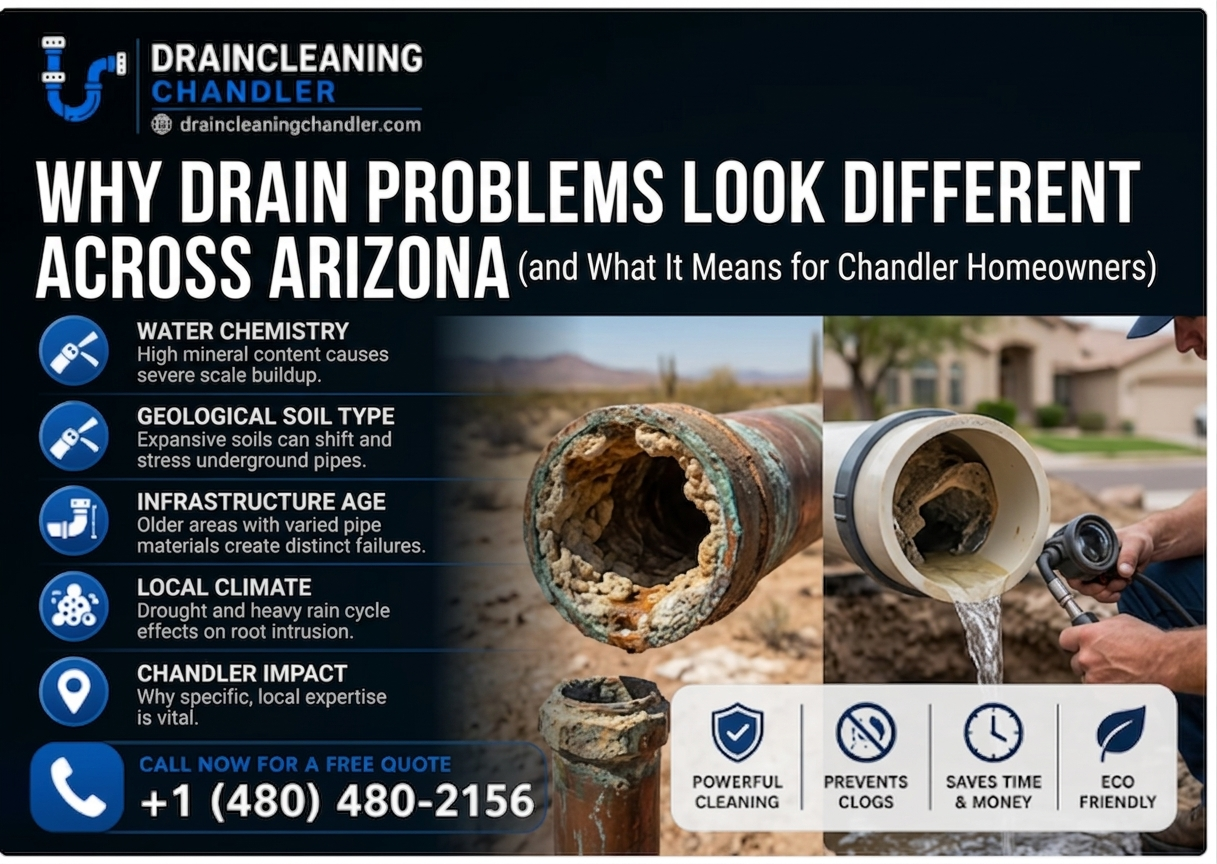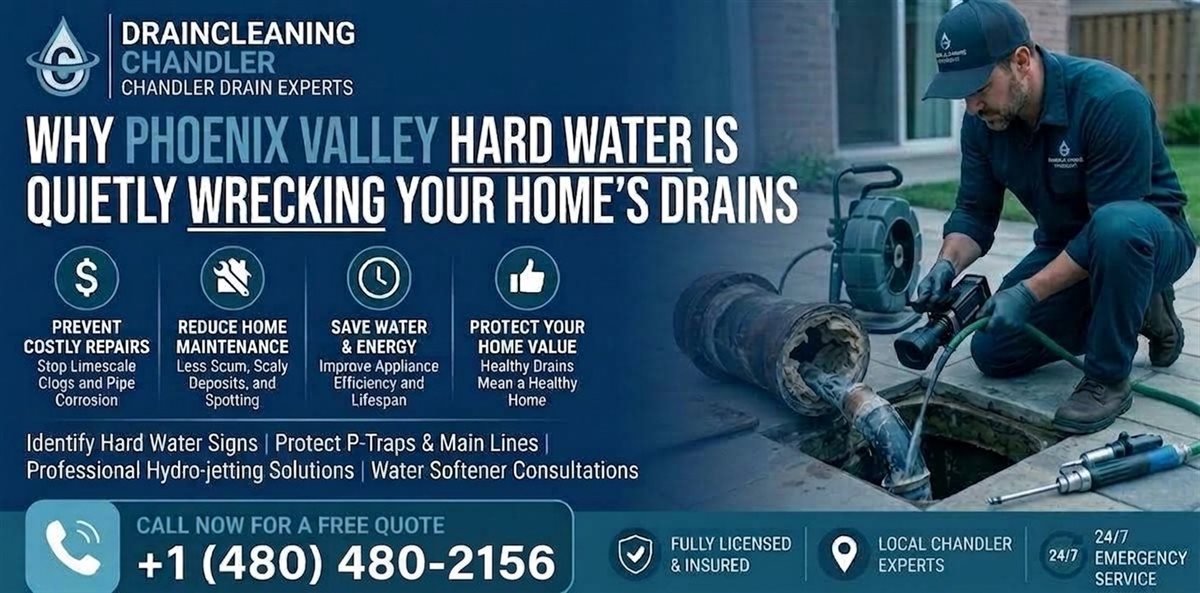
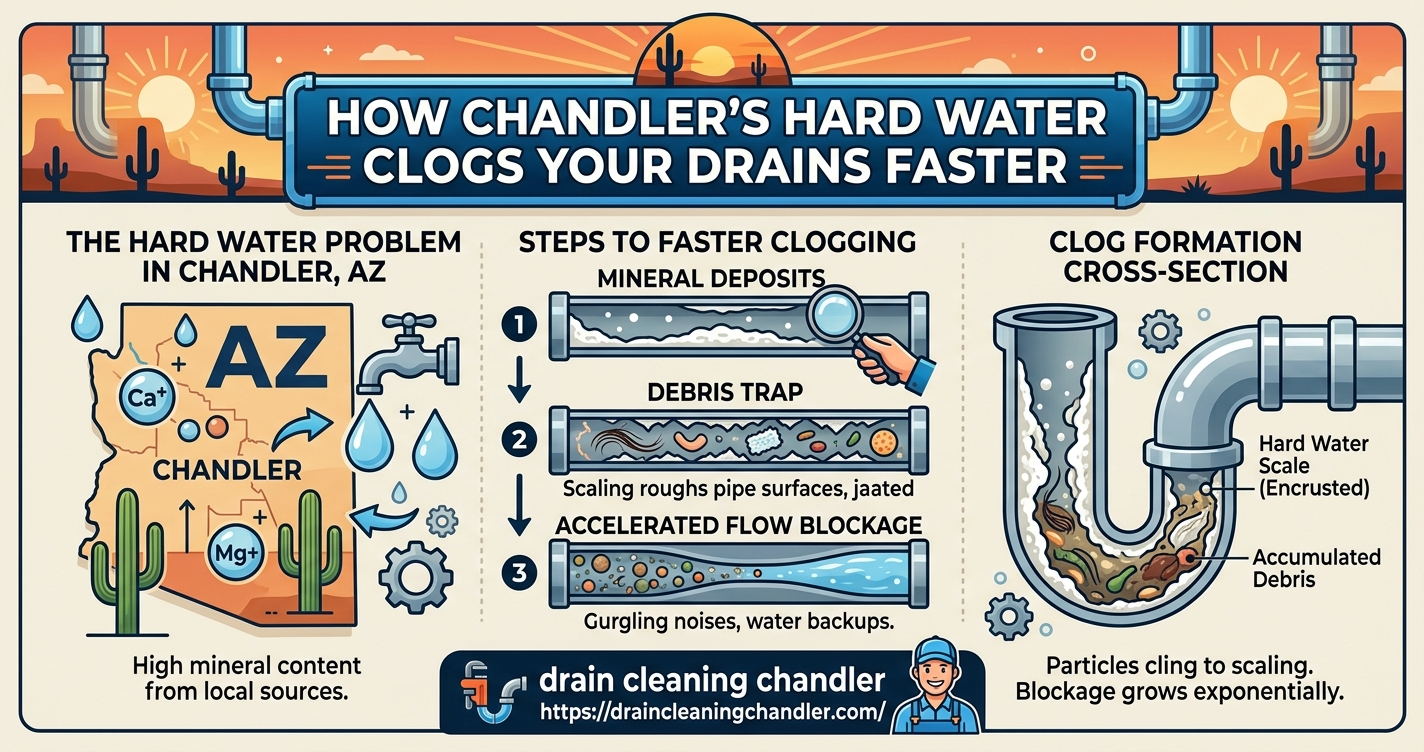
Does hard water cause clogged drains? Yes. Chandler’s water supply carries a high mineral content, mainly calcium and magnesium, that leaves behind scale deposits inside your pipes every time water runs through them. Over months and years that scale narrows the inside of the pipe, catches hair, soap, and grease, and leads to clogs far sooner than homes with softer water ever experience.
If you live in Chandler, AZ and feel like your drains clog more often than they should, hard water is very likely part of the problem. As a local drain cleaning professional, I see this constantly, especially in established neighborhoods like Sun Lakes where original plumbing has had years to accumulate mineral buildup. Understanding how hard water works against your pipes is the first step to protecting your home and avoiding repeat service calls.
What Is Hard Water
Hard water is water with a high concentration of dissolved minerals, primarily calcium carbonate and magnesium, picked up as it moves through soil and rock before reaching your home. Chandler sits in the Phoenix metro area, which pulls from a mix of groundwater and Colorado River and Salt River Project sources, both known for elevated mineral content.
How Hard Water Speeds Up Drain Clogs
Hard water does not clog a drain by itself the way hair or grease does. Instead, it changes the environment inside your pipe so that normal debris sticks and builds up much faster.
Here is what actually happens inside your plumbing.
- Mineral scale coats the pipe walls. As hard water flows through, calcium and magnesium slowly precipitate out and stick to the interior surface of the pipe, similar to the white crust you see on a shower head or faucet.
- The pipe diameter shrinks. That scale layer thickens over time, reducing how much water can flow through and slowing drainage even before an actual clog forms.
- Soap does not rinse away cleanly. Hard water reacts with soap to form soap scum, a sticky residue that clings to scale buildup and traps hair, skin cells, and grease.
- Rough scale catches debris. A smooth PVC or copper pipe lets debris pass through, but a scale coated pipe has a rough, uneven surface that snags hair and food particles instead of letting them flow to the main line.
- Water heaters and fixtures scale up too. Reduced flow from mineral buildup in water heaters and faucet aerators pushes more sediment into drains, adding to the problem.
The end result is a pipe that clogs in a fraction of the time it would take in a home with softened water.
Signs You Need Drain Cleaning
Hard water related clogs tend to show a specific pattern of warning signs before a full blockage happens.
- Slow draining sinks, tubs, or showers that get worse over a few weeks
- Gurgling sounds when water drains
- A white or gray crusty residue around drain openings
- Frequent clogs in the same drain, sometimes just weeks apart
- Reduced water pressure at fixtures connected to the affected line
- A faint musty or sour smell coming from slow drains
If several of these sound familiar, scheduling a professional drain cleaning now is far cheaper than waiting for a complete blockage or backup.
Why Chandler and Scottsdale Homes Experience Drain Issues
Chandler and neighboring Scottsdale share several conditions that make drain clogs more common than in many other parts of the country.
- High mineral water supply. Both cities draw from sources with naturally hard water, meaning scale buildup is an ongoing issue in nearly every home regardless of pipe age.
- Extreme summer heat. Consistently high temperatures accelerate mineral precipitation inside pipes and dry out water seals in rarely used drains.
- Established neighborhoods with older plumbing. Communities such as Sun Lakes have decades old pipe infrastructure that has accumulated significant scale, making them more prone to slow drains and clogs.
- Desert landscaping root systems. Mature trees search out any available moisture, including small cracks in aging sewer lines, compounding clog risk alongside mineral buildup.
- Heavy irrigation and pool backwash lines. Many Chandler and Scottsdale properties tie landscaping and pool equipment into drain systems that also see mineral deposits build up over time.
Homeowners in Sun Lakes in particular tend to notice clog patterns tied directly to water hardness because so many homes there still run original plumbing installed decades ago.
Average Drain Cleaning Costs in Chandler
Drain cleaning cost depends on the clog cause, drain location, and the amount of scale buildup a technician has to clear. Most Chandler homeowners pay between 125 and 450 dollars for standard drain cleaning, while heavier scale removal or sewer line work costs more.
Chandler Drain Cleaning Pricing Table
| Service | Typical Price Range |
|---|---|
| Sink or tub drain cleaning | 125 to 250 dollars |
| Toilet drain clearing | 100 to 225 dollars |
| Main line drain cleaning | 200 to 500 dollars |
| Hydro jetting for scale removal | 350 to 900 dollars |
| Sewer line camera inspection | 150 to 400 dollars |
| Sewer line cleaning or repair | 500 to 4,000 dollars |
| Water softener assessment add on | 75 to 150 dollars |
| Emergency after hours service | 150 to 350 dollars added fee |
Pricing shifts based on how much mineral scale has built up, how far the clog sits from the cleanout, and whether a camera inspection is needed to confirm the cause.
Factors That Affect Drain Cleaning Cost
- Amount of scale buildup. Heavier mineral deposits take longer to clear and may require hydro jetting instead of a standard snake.
- Pipe material. Older galvanized steel pipe scales up faster and more severely than modern PVC or copper.
- Clog location. A clog near an accessible cleanout is quicker and cheaper to reach than one deep in a main line.
- Whether a water softener is present. Homes without a softener typically need more frequent cleaning and heavier duty methods.
- Time of service. Weekend or emergency calls usually carry an added fee.
- Diagnostic needs. Recurring clogs may need a camera inspection to rule out a cracked or bellied pipe hiding behind the scale.
Different Drain Types Affected by Hard Water
Hard water buildup does not affect every drain equally. Here is how it typically shows up across a home.
- Kitchen sink drains combine grease with mineral scale, creating some of the toughest clogs to clear.
- Bathroom sink and tub drains collect soap scum on top of scale, which is why these drains often smell musty before they fully clog.
- Shower drains trap hair against a rough, scaled pipe wall far more easily than a smooth one.
- Main sewer lines accumulate scale over years, gradually shrinking capacity and making the whole home more prone to slow drainage during heavy use.
What Is Hydro Jetting
Hydro jetting is a drain cleaning method that uses high pressure water, typically 3,000 to 4,000 psi, to blast mineral scale, grease, and debris off the interior pipe wall rather than just punching a hole through the middle of a clog.
For hard water homes, hydro jetting is often more effective than a standard snake because it actually removes the rough scale layer causing repeat clogs instead of leaving it in place for debris to catch on again.
Sewer Line Cleaning
Sewer line cleaning addresses the main pipe connecting your home to the municipal sewer system, which is exactly where years of hard water scale tend to accumulate most.
A typical sewer line service for a hard water home includes:
- A camera inspection to measure scale thickness and locate problem areas
- Hydro jetting to strip scale and debris from the pipe wall
- Root cutting if tree intrusion is also present
- A follow up camera pass to confirm the line is fully clear
Routine sewer line maintenance every few years is one of the most effective ways to slow down hard water damage before it requires a full pipe replacement.
Camera Inspections
A camera inspection sends a waterproof camera through your pipes to show scale thickness, clog location, and pipe condition on a live screen. This lets a technician confirm whether a standard cleaning will solve the problem or whether hydro jetting or repair is needed.
Camera inspections are especially useful for hard water homes because scale buildup is not always visible from the surface and can be easy to underestimate without a direct look inside the pipe.
Emergency Drain Cleaning
How do I know if I have a drain emergency? If water is backing up into multiple fixtures at once, a toilet will not stop overflowing, or you notice sewage smell paired with gurgling drains throughout the house, that is a plumbing emergency that needs immediate attention rather than a scheduled visit.
Situations that call for Emergency Drain Cleaning include:
- Sudden backups across more than one drain or fixture
- A main line clog causing water to surface in a floor drain or yard
- Overflowing toilets that will not resolve with plunging
- A complete loss of drainage in the kitchen or bathroom
Homeowners in East Chandler, where older plumbing has had more time to accumulate scale, should treat sudden multi fixture backups as an emergency rather than waiting to see if it clears on its own.
Residential and Commercial Drain Cleaning Services
Hard water affects homes and businesses differently depending on water usage volume and pipe size.
Residential drain cleaning typically focuses on kitchen and bathroom fixture drains, main sewer lines, and periodic descaling to keep water flowing at a normal rate in single family homes and townhomes.
Commercial drain cleaning covers larger diameter lines, restaurant grease traps combined with scale buildup, and multi unit properties where hard water affects dozens of fixtures at once. Commercial properties generally need more frequent hydro jetting because higher water usage speeds up scale accumulation.
Cost Saving Tips for Chandler Homeowners
A few habits can significantly slow down how fast hard water clogs your drains.
- Install a whole home water softener to reduce mineral content before it ever reaches your pipes.
- Run hot water through drains weekly to help limit grease and scale bonding together.
- Use a mild descaling solution in slow drains between professional cleanings.
- Schedule a camera inspection every few years to track scale buildup before it causes a full clog.
- Clean faucet aerators and shower heads regularly, since visible scale there often mirrors what is happening inside your pipes.
- Consider Biological Drain Cleaning Solutions, a treatment that uses natural enzymes and bacteria to break down organic buildup without the harsh corrosion risk of chemical drain cleaners on scale coated pipes.
Why Professional Drain Cleaning Is Worth the Cost
Store bought chemical drain cleaners often struggle against hard water clogs because mineral scale is not organic material and does not dissolve the way hair or grease does. A licensed drain cleaning professional has the hydro jetting equipment and camera tools needed to actually strip scale from the pipe wall rather than just clearing a temporary path through it.
Professional service also prevents long term damage. Left unchecked, mineral scale buildup narrows pipes until a full replacement becomes the only option, which costs far more than routine descaling and maintenance. Investing in professional care now protects both your plumbing system and your budget down the road.
Conclusion
Chandler’s hard water is one of the most common reasons drains clog faster here than in many other regions, and the effects build up quietly until a slow drain turns into a full blockage. Whether you are dealing with mineral scale in a kitchen sink or scale buildup deep in your main sewer line, a professional inspection can identify exactly what is happening inside your pipes and stop the cycle before it gets expensive. If your drains have been running slower than they used to, reach out to a local drain cleaning team who understands Chandler’s water and can get things flowing properly again.
Frequently Asked Questions
Does hard water cause clogged drains? Yes. Hard water leaves mineral scale deposits inside pipes that narrow the interior diameter and create a rough surface where hair, soap, and grease catch and build up faster.
How can I tell if hard water is affecting my drains? Look for white or gray crusty residue around drain openings, faucets, and shower heads, along with drains that clog repeatedly in a short period of time.
Does a water softener stop drain clogs? A water softener significantly reduces mineral buildup inside pipes, which slows down scale related clogs, though it will not remove existing scale that has already accumulated.
Is hydro jetting better than chemical drain cleaners for hard water clogs? Yes, because hydro jetting physically removes the scale layer from the pipe wall, while most chemical cleaners are designed to break down organic material and have little effect on mineral deposits.
How often should Chandler homeowners get their drains cleaned? Most homes benefit from professional drain cleaning or a camera inspection every 12 to 24 months, with older homes in hard water heavy neighborhoods sometimes needing more frequent service.
Can hard water damage my sewer line? Yes. Years of mineral scale buildup can gradually narrow a sewer line’s capacity, making the entire home more prone to slow drainage and eventual backups.
Why do my drains clog faster than my neighbor’s in a different city? Water hardness varies by source and treatment, so a home in Chandler drawing from a higher mineral water supply will typically see faster scale buildup than a home in an area with softer water.
Is it safe to use vinegar or baking soda on hard water clogs? These home remedies can help with minor buildup but rarely remove significant mineral scale, so persistent or recurring clogs still need professional descaling.
Does hard water affect commercial properties more than homes? Commercial properties often see faster scale buildup due to higher water usage and larger pipe systems, which is why more frequent hydro jetting is typically recommended.
What is the fastest way to fix a hard water related clog? A professional hydro jetting service combined with a camera inspection is the fastest and most complete way to clear scale buildup and confirm the pipe is fully restored.
📞 Call Now(480) 480-2156