If you run a restaurant, food truck commissary, or commercial kitchen in Chandler, your grease trap is one of the most important and most overlooked parts of your plumbing. A neglected trap leads to backups, foul odors, failed health inspections, and expensive emergency calls at the worst possible time. This guide covers how often to clean a grease trap in Chandler, the warning signs, what it costs, and the rules you need to follow.
What a Grease Trap Does and Why It Matters
A grease trap, sometimes called a grease interceptor, sits between your kitchen drains and the city sewer line. It slows wastewater down so fats, oils, and grease float to the top and solids settle to the bottom, while cleaner water passes through. When the trap fills up, that grease starts flowing into your sewer line, where it hardens and causes backups that shut a kitchen down fast.
How Often Should a Chandler Restaurant Clean Its Grease Trap?
The general rule is the 25 percent rule: a grease trap should be cleaned once the fats, oils, and grease plus solids reach 25 percent of the trap’s total depth. For most Chandler kitchens that means:
- High-volume restaurants and fryers: every 1 to 4 weeks
- Standard sit-down restaurants: every 4 to 8 weeks
- Cafes, bars, and light-use kitchens: every 1 to 3 months
Chandler and Maricopa County require food service businesses to keep grease traps maintained and to keep cleaning records. Skipping service is one of the fastest ways to fail an inspection.
Signs Your Grease Trap Needs Cleaning Now
- Slow drains in kitchen sinks and floor drains
- Foul, rotten odor coming from drains or the trap
- Grease or dark water backing up near the trap
- Visible grease layer more than a quarter of the trap depth
- A recent failed or flagged health inspection
What Happens During a Grease Trap Cleaning
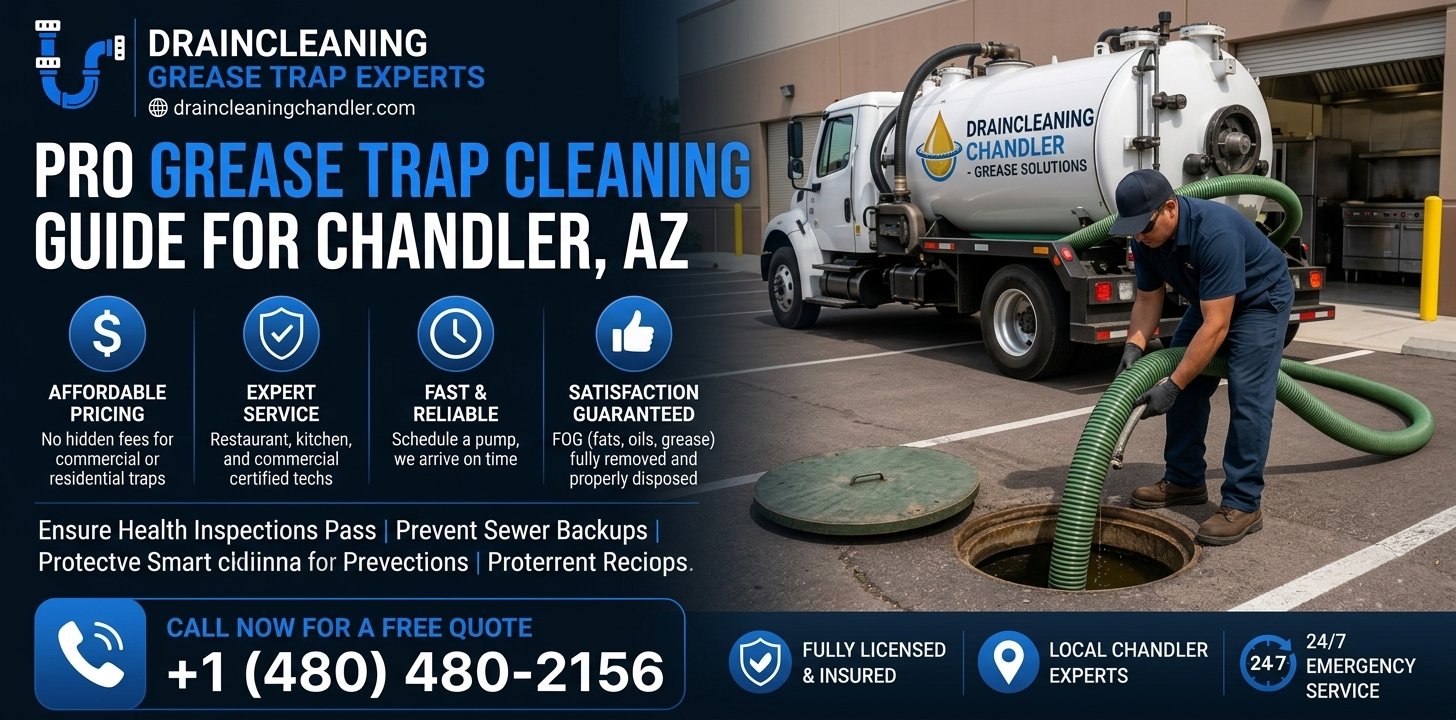
A proper grease trap cleaning is more than a quick skim. Our crew pumps out the entire contents of the trap, scrapes the walls, baffles, and lid, inspects for damage, and confirms the outlet flows freely. We keep a service record you can show an inspector, and we haul the waste away for proper disposal.
Grease Trap Cleaning Cost in Chandler
Cost depends on the size of the trap and how often it is serviced. Small under-sink units are the least expensive, while large in-ground interceptors cost more per visit. Restaurants on a regular schedule almost always pay less over the year than those who wait for an emergency backup, because a hardened, overflowing trap takes far more labor to clear.
Grease Trap vs Grease Interceptor
A grease trap is the smaller unit under or near the sink that handles lower flow. A grease interceptor is the larger in-ground tank built for high-volume kitchens. Both do the same job of separating grease from wastewater, and both need regular pumping and cleaning to stay compliant and backup-free.
Do’s and Don’ts for Kitchen Staff
Do
- Scrape plates and pans into the trash before washing
- Use sink strainers to catch food solids
- Keep a cleaning schedule and log every service
- Train new staff on what not to pour down the drain
Don’t
- Do not pour used cooking oil or grease down any drain
- Do not rely on hot water or degreasers to push grease through, it only moves the problem down the line
- Do not wait for a backup to schedule service
Emergency Grease Trap Backups
A grease trap backup during service hours is an emergency. Wastewater on the floor is a health code violation and can force you to close until it is cleared. If your trap is overflowing or your kitchen drains are backing up, shut down the affected sinks and call for emergency grease trap service right away.
Frequently Asked Questions
How often does Chandler require grease trap cleaning?
Chandler follows the 25 percent rule and requires food service businesses to keep traps maintained and to keep records. Most kitchens land between every 1 and 8 weeks depending on volume.
What happens if I do not clean my grease trap?
Grease overflows into your sewer line, hardens, and causes backups. You risk failed inspections, fines, odors, and a forced closure during service.
Do you offer emergency grease trap service in Chandler?
Yes. We provide 24/7 emergency grease trap cleaning for Chandler restaurants and commercial kitchens, plus scheduled maintenance plans.
📞 Call Now(480) 480-2156